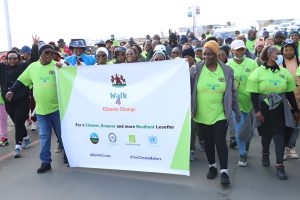
Over the course of three days, from September 17th to 19th, 2025 the National Adaptation Plan (NAP) team, in partnership with the Ministry of Gender, Youth and Social Development, hosted a landmark workshop aimed at integrating Gender Equality and Social Inclusion (GESI) into Lesotho’s climate strategy. This initiative places Lesotho among five African countries piloting the mainstreaming of GESI into the NAP process, with support from the International Institute for Sustainable Development (IISD) and the NAP Global Network.
The workshop brought together a diverse group of stakeholders, including government officials, civil society organizations, youth representatives, and gender experts. Their shared mission was to ensure that climate adaptation planning reflects the lived experiences and voices of those most vulnerable to climate change, particularly women, youth, and people with disabilities. Through interactive sessions and technical training, participants explored how climate change disproportionately affects these groups and developed tools to embed gender-responsive approaches into national frameworks.
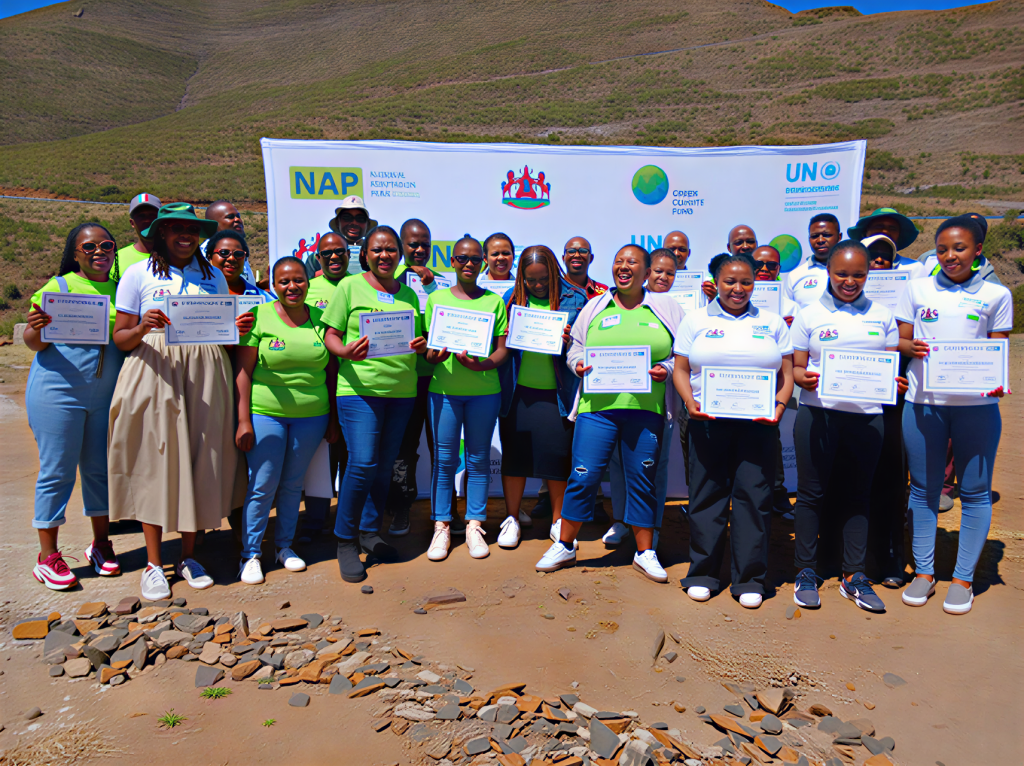
Lesotho’s NAP is currently progressing through its second phase, which focuses on conducting a Climate Risk and Vulnerability Assessment (CRVA). This assessment is scheduled for completion by the end of September 2025 and will inform the next steps of the NAP process, including the identification of adaptation priorities, economic evaluations of proposed interventions, and the compilation of the final NAP document.
Throughout the workshop, participants emphasized the importance of inclusive planning. Discussions highlighted how daily survival task such as water and firewood collection are often carried out by women and children, exposing them to environmental hazards and social risks. These realities underscore the need for climate policies that are not only technically sound but also socially just.
Lesotho’s approach to climate resilience is evolving, not just through data and infrastructure, but through the deliberate inclusion of every voice. By centering equity and participation, the country is laying the foundation for a climate strategy that is locally grounded, socially responsive, and globally relevant.